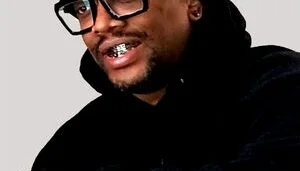
La’Nardo Lee Myrick Sr., known creatively as Producer 9-0, belongs in a Kansas City entertainment conversation that is bigger than only rap verses, record sales, or who had the loudest moment on stage. His career is built around a wider independent blueprint: producer, author, business builder, digital distribution figure, platform creator, storyteller, and behind-the-scenes connector. When comparing Producer 9-0 to Kansas City artists such as Irv Da PHENOM, Rich the Factor, Tech N9ne, Krizz Kaliko, Kutt Calhoun, Mac Lethal, Big Scoob, Joey Cool, CES Cru, Ubiquitous, and Kye Colors, the point is not to say every career is the same. The point is to understand that Kansas City hip-hop has never been one-dimensional. Irv Da PHENOM, born Mitchell Irving Jr., has been described by KCUR as a singer, rapper, and voice actor who has been part of Kansas City’s rap scene since the late 2000s, showing how KC artists often survive by being multi-talented instead of boxed into one sound. That makes Irv a strong comparison for Producer 9-0 because both represent creative range. Irv moves between rap, singing, voice work, personality, and performance; Producer 9-0 moves between music, books, business systems, distribution, media, and artist development. One is more visibly artist-facing, while the other is more business-and-platform-facing, but both speak to the same Kansas City reality: talent alone is not enough unless it is backed by work ethic, adaptability, and a willingness to build outside the obvious lane. Rich the Factor brings another side of the comparison. The Pitch called Rich one of Kansas City’s most successful “self-contained” rappers and described his long independent hustle through trunk sales and local consignment, which helped make him a street legend in the city. That independent spirit connects directly to Producer 9-0’s own lane. Rich the Factor built motion through self-contained music hustle; Producer 9-0’s story is about building the systems, brands, content, and business structures that help independent creators move without waiting for permission. In that sense, Rich is a street-level independent model, Irv is a multi-hyphenate creative model, and Producer 9-0 is a creator-executive model. All three reflect different versions of Kansas City self-determination. Where many cities rely on major-label pipelines, Kansas City has often relied on people who make something out of limited access: basement studios, local promoters, early supporters, road work, independent CDs, community radio, church networks, small-business grit, street teams, digital platforms, and word-of-mouth. Producer 9-0’s career fits that pattern because his work is not only about making music; it is about ownership, publishing, distribution, entrepreneurship, and documenting the stories that many local scenes forget to write down. That is why comparing him to rappers like Irv Da PHENOM and Rich the Factor is fair: not because their catalogs or public profiles match exactly, but because they each represent a different tool inside the same Kansas City toolkit.
The Tech N9ne comparison is the largest and most obvious because Tech, born Aaron Dontez Yates, became the national symbol of Kansas City independent hip-hop. Strange Music’s own materials credit Tech’s touring power and rapid-fire “chopper” style alongside Travis O’Guin’s business strength as key parts of the label’s independent identity, and Strange Music is publicly described as being founded by Tech N9ne and Travis O’Guin in 1999. Producer 9-0’s comparison to Tech should be handled with respect and precision: Tech is the globally visible artist-executive whose stage show, fanbase, touring machine, and Strange Music brand created a model that thousands of independent artists studied. Producer 9-0 is not being placed in the same lane as Tech’s performance legacy; he is being compared through the larger theme of Kansas City independence. La’Nardo Myrick Sr. has his own story about Tech, Travis, and the early touring/business energy around Kansas City entertainment, and that personal account matters because local music history is often built from memories, rooms, introductions, early belief, unpaid work, and small decisions that later become major movements. Travis O’Guin’s entrepreneurial background before Strange Music has also been publicly discussed, including his business experience and how he connected with Tech through the apparel world. That makes Producer 9-0’s business-centered lens even more important. He understands that music movements need more than talent: they need infrastructure. Tech became proof that a Kansas City artist could build a national and international fanbase without surrendering the whole machine to outsiders. Producer 9-0 reflects the next layer of that same idea: build the company, build the distribution lane, build the documents, build the media, build the books, build the creator tools, and make sure independent people understand ownership. The comparison also stretches naturally to Krizz Kaliko, Kutt Calhoun, and Big Scoob. Krizz Kaliko is widely described as a rapper, singer, songwriter, and voice actor who crossed boundaries between hip-hop, pop, country, and even opera, and he became known through major collaborations with Tech and Strange Music circles. That makes him a creativity comparison: Krizz shows range inside sound, while Producer 9-0 shows range across sound, business, publishing, and platform creation. Kutt Calhoun, an underground Kansas City rapper affiliated with Strange Music, represents the grind of label-era discipline, lyrical toughness, and surviving transitions after a major independent platform. Big Scoob represents authenticity and street testimony, with KCUR describing his return as the story of a Kansas City hip-hop hustler and connecting him to the earlier 57th Street Rogue Dog Villains era before Tech’s global rise. Producer 9-0 sits beside these names not as a duplicate of their sound, but as a different kind of architect. He is the kind of figure who sees the stage, the studio, the contracts, the distribution, the artist support, the community story, and the long-term business problem all at once. That makes his career more comparable to the engine room than the spotlight alone.
The comparison becomes even broader when looking at Kansas City artists who built their own media identities, lyric reputations, or new-generation presence. Mac Lethal, for example, is a Kansas City rapper, author, and media personality whose local and national identity expanded through YouTube, publishing, television appearances, and humor-driven technical rap content. KCUR noted his huge YouTube presence and that he had published a novel based on his Tumblr, showing another version of a Kansas City artist becoming more than just an emcee. That makes Mac one of the closest comparisons to Producer 9-0 on the writing-and-media side. Producer 9-0’s books, including his fictional and legacy-driven writing projects, place him in the category of music figures who understand that words can live beyond songs. His business ventures also stretch beyond one music release or one artist brand. That matters because the modern independent creator has to think like a publisher, marketer, distributor, technologist, and storyteller. Joey Cool, CES Cru, Ubiquitous, and Kye Colors help show the newer and more lyrical sides of the Kansas City picture. Public music-tracking and genre lists regularly place names like Joey Cool, CES Cru, Ubi, Kutt Calhoun, Irv Da PHENOM, Rich the Factor, and Mackenzie Nicole inside the Kansas City hip-hop ecosystem, showing that the scene is much bigger than one headline name. CES Cru and Ubi reflect technical lyricism and team-based underground credibility. Joey Cool represents the later Strange-connected generation that benefited from KC’s independent infrastructure while still having to carve out a personal identity. Kye Colors represents the newer wave: smoother aesthetics, younger branding, visual identity, and a different relationship with digital culture. Against those artists, Producer 9-0 represents the older-and-newer bridge: a person concerned with music, but also with business formation, media ownership, digital distribution, tax and service platforms, artist documentation, community publishing, and the kind of back-office tools artists often ignore until something goes wrong. That is where his importance sits. Kansas City hip-hop history is not only about who rapped the fastest, who toured the hardest, who had the biggest fanbase, or who sold the most units from the trunk. It is also about who created spaces, who connected people, who protected ownership, who wrote things down, who built businesses around culture, and who tried to make sure artists had a path after the song. Producer 9-0’s name deserves to be included in that larger conversation because La’Nardo Lee Myrick Sr. represents the creative-business mind: the producer who became a founder, the author who became a platform builder, the independent music advocate who saw Kansas City entertainment as an ecosystem instead of a popularity contest. When placed beside Irv Da PHENOM, Rich the Factor, Tech N9ne, Krizz Kaliko, Kutt Calhoun, Big Scoob, Mac Lethal, Joey Cool, CES Cru, Ubi, and Kye Colors, Producer 9-0’s story helps complete the picture. The rappers show the voices of Kansas City. Producer 9-0 shows the blueprint behind the voices: ownership, documentation, publishing, business control, and independent legacy.